Code is clay
Software used to be a deliberate process. You’d have an idea of what you wanted to build, spend time planning it, and then write the code. Changing your mind meant going back and rewriting it.
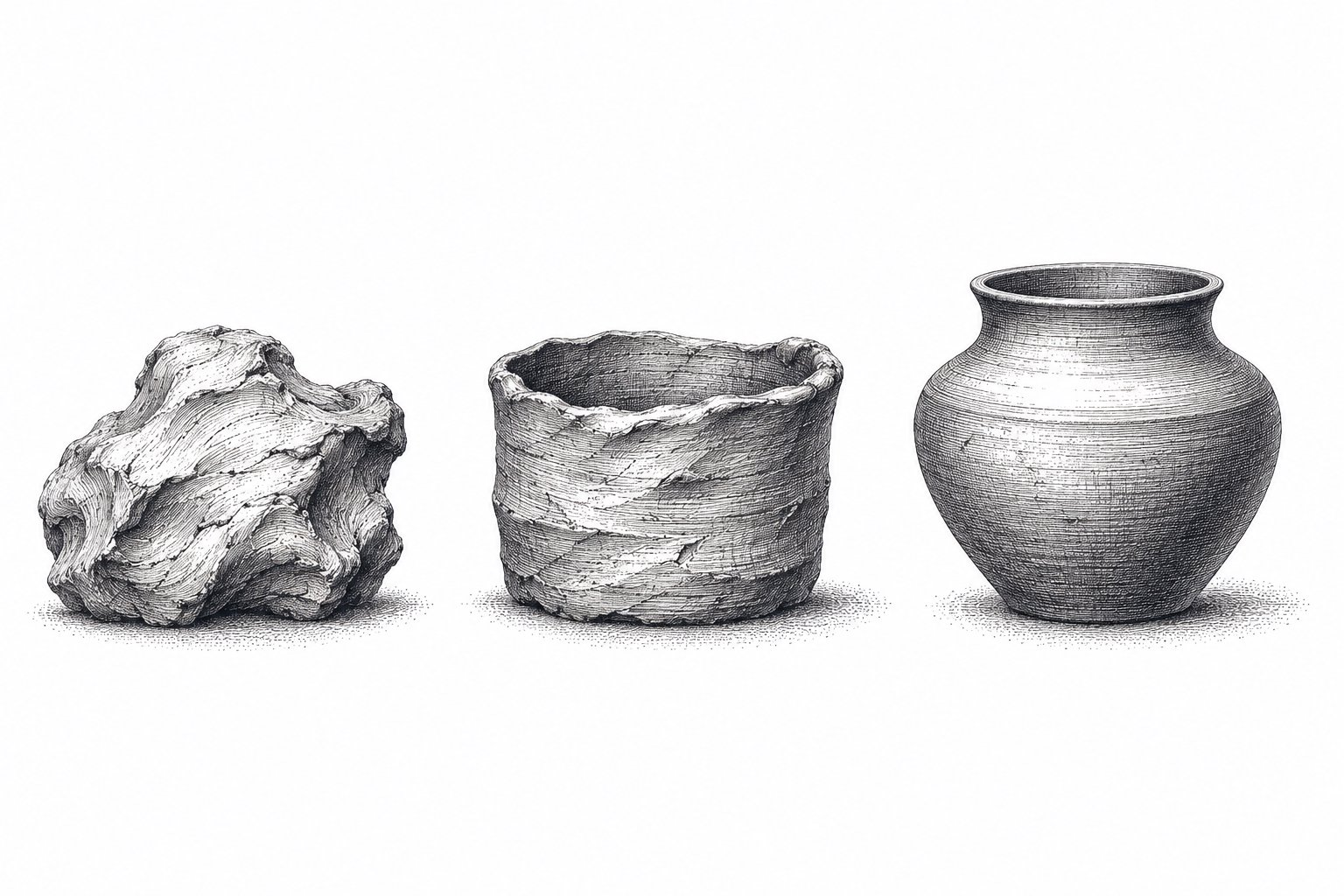
Nowadays, software is being built differently. Code is clay.
It’s becoming something you sculpt. You give an agent a prompt, see what it comes back with, and leave comments for another pass. Much like a potter working with clay, you’re constantly shaping something the product into what you want it to be.
Let’s say I have an agent implement a filter for a page. It gives me a whole new screen, which makes me realise I actually just want a switch on the screen I’m already on.
The agent implements the switch and removes the screen. Great.
The first pass gave me something to react to. By the time I ran the second prompt, I had a much better idea of what I was building and what I wanted.
This also means that ‘taste’ plays a much, much greater role.
Both implementations worked, but one was clearly better. The agent could build either of them, but it was up to me to decide which one belonged in the product.
An engineer who pushes code with all their agent’s -isms has made no attempt to sculpt their work into something worth maintaining.
And it’s easier than ever to maintain your opinions. AGENTS.md, skill files, and linters can help enforce the patterns and conventions you want. But they can’t always tell you what should be built in the first place.
Continuing the example above. The switch works, but the agent has left the filtering function in some unrelated file from its first attempt.
Do I leave it there because the app works? Or do I take another pass and clean up what’s been left behind? It’s easy to overlook these things when generating another implementation takes seconds. But that doesn’t mean the code you leave behind doesn’t matter.
While the cost of code gets lower, I find myself caring more about what it’s like to come back to and work with. I’ll probably change it again. Probably tomorrow.